The Indian real estate market is entering a new phase. The days of super-fast growth are over. The sector is now moving towards steady, normal growth. If you are planning to buy a home or invest in property, you need to understand what is coming. This article covers the real estate market predictions 2026 and what experts are saying about the real estate forecast next 5 years.
What Happened in 2025?
Before we look ahead, let us quickly recap 2025. The residential sector saw a slowdown in sales for the second year in a row . High prices made it difficult for many buyers to afford homes. But here is the twist - even though fewer homes were sold, the total value of transactions went up. This happened because developers focused more on premium and luxury housing .
The commercial sector did very well. Office leasing remained strong. Global capability centres (GCCs) and flexible workspace operators drove most of the demand . Industrial real estate and warehousing also saw good growth, driven by manufacturing demand and e-commerce .
Read More: Real Estate Flipping Strategy for Beginners
Real Estate Market Predictions 2026
Residential Real Estate: Steady but Slower
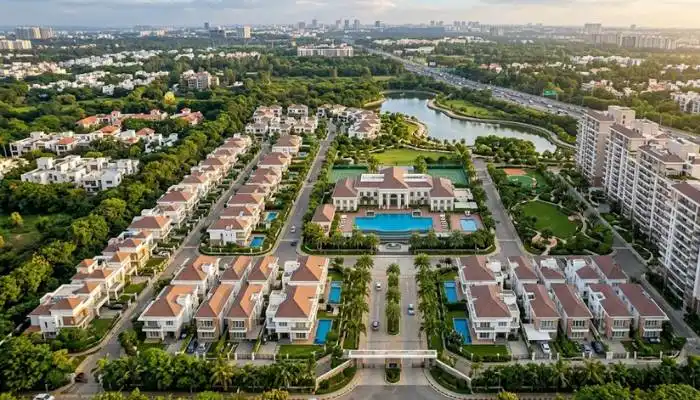
The residential market is expected to remain stable but moderate in 2026 . The euphoric boom cycle is over. Sales will not grow like they did in the post-COVID years. Growth rates are likely to moderate to less than 10-12%, down from over 30% growth in previous years for top developers .
Price growth is also expected to cool down. After rising 13-15% in FY25, home prices are expected to climb just 3-5% in FY26 . Some experts predict price appreciation of around 6% over the next two years .
What this means for you: If you are a buyer, this is good news. Prices are not shooting up like before. You have more time to decide. You can negotiate better.
Luxury Housing: Cooling Down
The luxury housing segment has been the star performer. But experts say this may not last. A Reuters poll found that 11 out of 15 analysts believe the luxury segment will stop being the driving force within five years .
A survey by India Sotheby's International Realty found that 56% of high-net-worth individuals (HNIs) expect the luxury residential market to cool down in FY27 . Wealthy investors are becoming more selective. They are looking for quality and long-term value .
What this means for you: If you are eyeing a luxury property, be careful. Do not buy just because prices are going up. Think about long-term value.
Commercial Real Estate: The Bright Spot
Commercial real estate is expected to outperform residential in 2026 . Office leasing is projected to remain robust. Gross leasing is expected to surpass 80 million square feet, almost at par with 2024 levels . GCCs are expected to account for 35-40% of total office demand .
Grade A office assets typically offer rental yields of 6-8%, with long-term leases and annual escalations of around 5% . This makes commercial real estate a more predictable income avenue compared to residential.
What this means for you: If you are an investor looking for steady income, commercial real estate offers better returns. But it requires higher capital.
Logistics and Warehousing: Strong Growth
Logistics and warehousing are expected to see 15-18% growth in leasing in 2026 . This is driven by manufacturing demand, e-commerce, and supply chain localisation . Blackstone's Horizon Industrial Parks is also likely to launch an IPO to raise around $300 million .
What this means for you: This is a specialised segment. If you have the capital, it offers good long-term potential.

Real Estate Forecast Next 5 Years
What Experts Are Saying
1. Normalisation of Growth: The sector is moving from a sharp upcycle to normalised growth. The days of 30% annual growth are over. Growth will be steady but more moderate .
2. Premiumisation Continues: Developers are focusing on premium and upper-mid segments. These yield higher margins. The share of affordable housing is shrinking . India is short of about 10 million affordable homes, and this gap is projected to triple by 2030 .
3. Tier-II Cities Rise: Tier-II cities like Lucknow, Indore, Coimbatore, and Jaipur are seeing 20-25% demand growth. Better connectivity and infrastructure are driving this trend .
4. Institutional Investment Increases: Institutional investments in Indian real estate reached $10.50 billion in 2025 . This trend is expected to continue. Global funds increasingly favour Indian real estate .
5. Technology and Sustainability: Green buildings, smart energy use, and ESG-compliant developments are becoming baseline expectations . Technology adoption in planning, construction, and advisory is accelerating.
You May Also Read: How to Calculate Home Loan EMI for 40 Lakh Loan
Where Are the Best Opportunities?
For Homebuyers
2026 is a good time to buy. Prices are not rising as fast. You can negotiate better deals. Focus on:
- Mid-income and upper-mid segments: These show more resilience .
- Tier-II cities: Better affordability and growth potential.
- Branded developers: They have better delivery records .
For Investors
Commercial real estate offers better yields. Grade A offices give 6-8% rental yields . Logistics and data centres are also strong growth drivers .
Be cautious with luxury residential. Returns may moderate. Avoid FOMO (fear of missing out) .
Key Risks to Watch
1. Affordability: High prices are making it difficult for first-time buyers. Only 8 out of 15 analysts expect affordability to improve .
2. Oversupply: Some markets may see a 5-10% price correction due to oversupply .
3. Geopolitical Uncertainty: Global conflicts can impact construction costs and execution timelines .
4. GCC Sensitivity: Commercial real estate depends on GCCs, which are sensitive to Indo-American trade dynamics .
Final Verdict
The real estate market predictions 2026 point to a stable but slower year. The sector is moving from momentum to meaningful growth. Quality, governance, and long-term value will matter more than speed.
For homebuyers, 2026 offers better affordability and negotiation power. For investors, commercial real estate and logistics offer better yields than residential.
The real estate forecast next 5 years suggests that the sector will become more institutionalised, tech-driven, and sustainable. Tier-II cities and premium segments will lead growth. But affordability concerns and supply-demand gaps remain.
FAQs
1. Will real estate prices go down in 2026?
Prices will not crash. Growth will slow from 13-15% to just 3-5%. Builders may offer discounts in areas with excess stock. Good time to negotiate, but do not expect a big price drop.
2. Is 2026 a good time to buy a house?
Yes. Prices are stable. Interest rates are steady. Builders are offering deals. You have time to compare and negotiate. But do not wait too long - construction costs will push prices up eventually.
3. Which cities will see the best growth?
Tier-II cities like Lucknow, Indore, Jaipur, and Coimbatore will lead. Better infrastructure and lower prices are attracting buyers. Metro cities will see premium segment growth only.
4. Commercial or residential - which is better for investment?
Commercial gives 6-8% rental yield. Residential gives only 2-4%. Commercial has long leases and annual rent hikes. But it needs higher capital. Residential is more affordable for small investors.
5. Should I buy luxury or mid-range property?
Mid-range is safer. Luxury segment is cooling down. Wealthy buyers are becoming picky. Luxury flats are harder to resell. Mid-range properties have more buyers and better resale value.