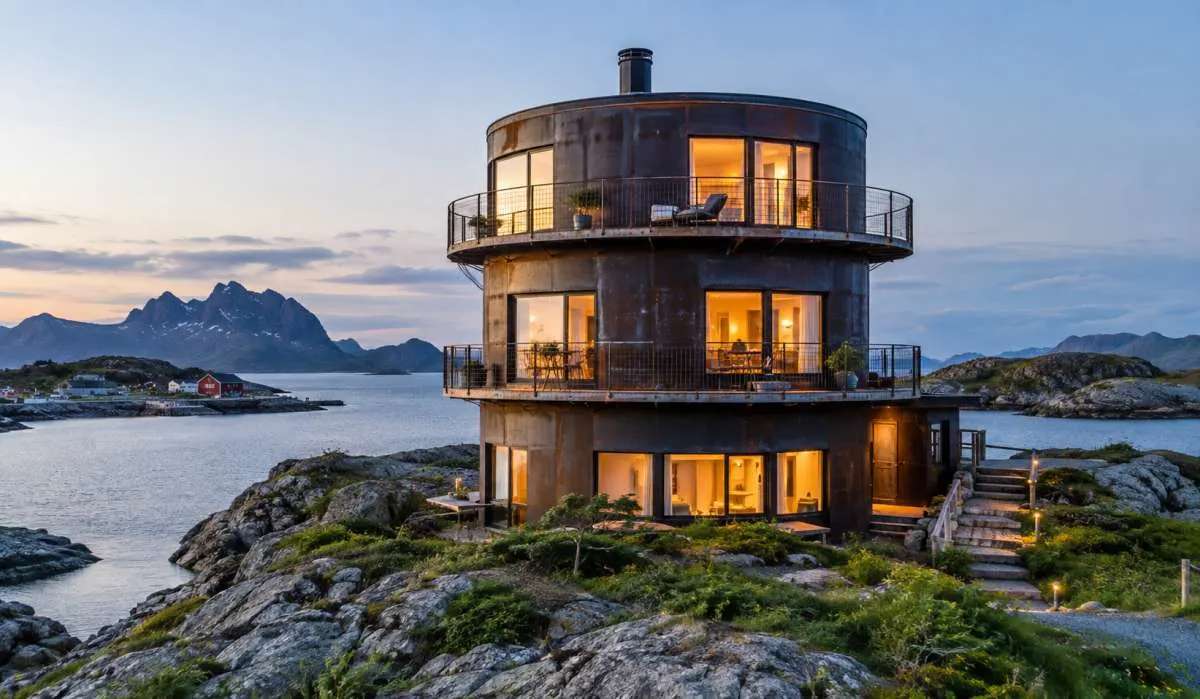
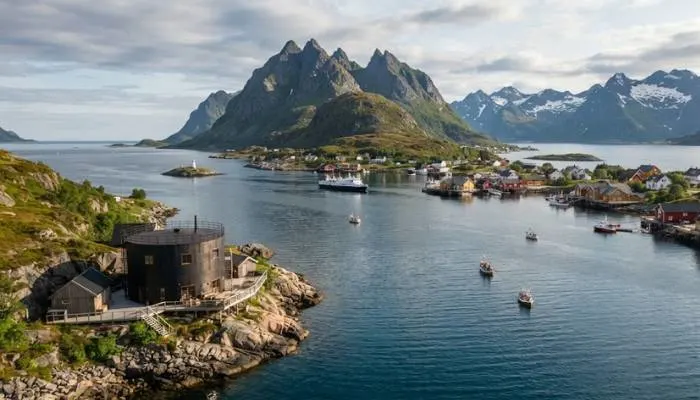
An oil tank home renovation may sound unusual, but Martin Otterbeck saw something special in an abandoned tank on Norway’s Skrova island. Instead of viewing the rusty structure as waste, he imagined a unique home with panoramic views of the surrounding fjord Martin knew his way around a carpentry, so he did much of the transformation himself, working at the interior.
He was determined to see the project through despite the planning approvals, the large scale of change and creative solutions that had to be implemented. A long abandoned oil tank has been transformed into a grand three-level getaway with its industrial past and inviting comfortable home.
One visionary couple's amazing home renovation
That old, battered oil tank might not be where you expect to find a house. But when Martin Otterbeck, 59, encountered a disused tank on the small Norwegian island of Skrova, he didn't see all that inside it: the two and a half tonne, 11-metres (36 ft) high container was nothing but potential.
With determination, dedication and an ambitious vision, Martin set about turning his oil tank into his new home. Martin talks about how he built himself a beautiful home out of a most unlikely of materials.
Read More: Best Rental Markets for Investors in 2026: Global Guide
Island life
Martin Otterbeck works as a cameraman, shooting most of his projects on feature films and television dramas, along with some documentaries. His partner Agnete is one of Norway's most well-known portrait and reportage photographers.
The pair didn't choose the oil tank as their first odd accommodation either; they based themselves in a disused railway station in Oslo. "We travel a lot due to our jobs," Martin explains. "We try to spend as much time as possible in Lofoten, particularly on the islands of Skrova and Rst."
The joy of DIY
Martin already had experience in construction after training as a carpenter, so he knew he could reduce the prices by doing all the building work himself. He qualified as a cabinetmaker and interior carpenter and earned a living doing this until he was 30.
"These days, carpentry is more of a passion and hobby for me something I work on when I have time and inspiration," says Martin. "I enjoy using my hands on building and artistic projects as part of my film work."
Intrigued by the round shape
Aside from the panoramic, 360-degree views of the surrounding Norwegian fjord, the design of the tank attracted many people. Martin has long wanted to be able to make a round house.
"I've always been curious about round things and I really like to find upside-down scenarios," says Martin. "I try to think about infusing existing things with new and different uses while still retaining their identity and history."
A price too good to resist
Martin enquired about the price of the abandoned tank; the owner said it would be 15,000 Norwegian Krone ($1,484/1,094). "Being a student, I had tight finances and had to find affordable and functional solutions," Martin recalls. "I had to keep the budget for purchase and transformation of the tank into a house to no more than 1,000,000 Norwegian Krone ($98,945/72,958) which I, of course, managed to stay within."
Signing the deal
"To most of the 180 residents who live their full time and who have to drive past it every day, the oil tank appeared to them as just a rusty environmental waste that needed to come out," Martin says. "To me, it stood out as the most perfectly positioned building on the island, sitting atop a hill with a spectacular view over everything."
The history of the oil tank
According to Martin, the buyer's father had acquired a license in the early 1960s, allowing him to sell diesel to the fishermen who turned in their catch at the factory. The oil tank installers installed the tank in 1962 and provided fuel for boats coming into the island until the early 1980s.
The small fishing boat era was coming to an end then and replaced by larger ships where the fish was processed on the boat. The family scaled back and ceased selling fuel.
The bureaucracy begins
After Martin purchased the oil tank, the largest hurdle was local authorities giving the all clear to turn it into a modern holiday retreat. "It took a while to persuade the local planning department that I actually meant to carry the project out," Martin explains.
"Fortunately, other people in the department saw the vision and knew how to get through the often-archaeological bureaucracy." He began on-site work in the spring of 2008.
You May Also Read: Real Estate Market Predictions 2026: Trends, Prices and Opportunities
Coming up with solutions to problems
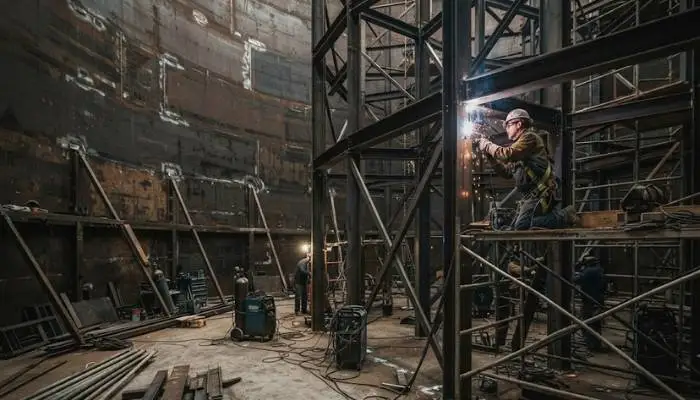
Getting the approvals to allow him to turn his oil tank into a home presented just the first challenge; plenty more challenges awaited. The first physical step involved cutting the roof from the tank and raising it 11.8 inches (30cm) to provide enough headroom for three floors – many more steps would follow.
"There were moments along the way when it didn't exactly go to plan, but that only fueled my fire to keep searching for ways," recalls Martin.
Fuelled by an urge to prove the doubters wrong
Instead of critics putting him off, the sceptics pushed Martin to put more effort in. "I was excited by the negative feedback to the project and it motivated me to prove people wrong.
'It can be a beautiful thing,' I thought," he says. I have an older brother-in-law that I like a lot. He's a doctor and very conservative. I used him as a reference, and he accompanied me on my first inside the tank. I remember he was absolutely excited. That was a key moment.
FAQs
1. How did Martin Otterbeck turn an oil tank into a home?
Martin transformed the abandoned oil tank through extensive structural and interior renovation. He raised the roof, created three floors and added the features needed for a comfortable home.
2. Where is the converted oil tank home located?
The unusual home is located on the Norwegian island of Skrova in the Lofoten area.
3. How much did the old oil tank cost?
Martin bought the abandoned tank for 15,000 Norwegian Krone, according to the information provided in the article.
4. Why did Martin choose an oil tank for his home?
He was attracted by its unusual round shape, spectacular location and panoramic views. He also enjoyed giving existing structures a new purpose while preserving their history.
5. What was the biggest challenge during the renovation?
One of the biggest challenges was getting approval from local authorities to convert the former oil tank into a modern holiday home.